
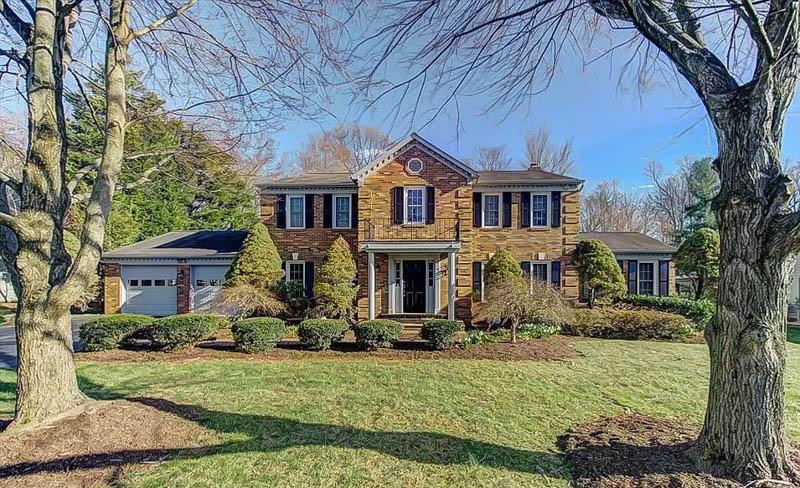
How do you downsize in Franklin Farm without the process becoming overwhelming?
I’ve been helping Franklin Farm homeowners through this exact transition
since 2003. And I’ll tell you upfront: the clients who feel least stressed are the ones who start
planning early and understand what’s actually required before they ever put a sign in the
yard.
Here’s what you need to know.
Why Franklin Farm Homeowners Are Downsizing Now
You’re not alone in thinking about this. Franklin Farm fits that picture well. Many of the neighborhood’s single-family homes were built in the 1980s and early 1990s. After 30-plus years, those homes are carrying equity, and their owners are carrying a lot of square footage they no longer need.
The Northern Virginia market in 2026 continues to favor well-prepared sellers in established communities like Franklin Farm. Buyers want move-in-ready homes, and downsizers who take the time to prepare properly are consistently landing strong outcomes. Your specific timing, pricing, and net will depend on your home’s condition and the current inventory picture, which is exactly what a local market analysis is for. But the fundamentals are working in your favor.
If you’re weighing whether to renovate for aging-in-place versus actually moving,
FairfaxCounty’s Housing Options for Older Adults resource is worth a look. It outlines the real trade-offs between staying put with modifications versus transitioning to a smaller home or condo. I walk clients through this decision all the time, and the right answer is genuinely different for everyone.
The
Step-by-Step Downsizing Process in Franklin Farm
Step 1: Declutter and Prepare
Before Anything Else
This is the step most people underestimate. A longtime family
home in Franklin Farm has decades of accumulated belongings, and trying to stage,
photograph, and show a home that hasn’t been edited is a real disadvantage. Start this process
months before you plan to list.
Practical approach: tackle one room per week, and be
honest
about what moves with you to a smaller space. Donate, sell, or gift what doesn’t. Then focus on
repairs and presentation. My post on top-dollar home prep
for Fairfax sellers walks through exactly what buyers in this market notice first.
For
staging, the goal in a downsizing sale is to help buyers see the home’s potential without your
personal history in every room. Neutral, edited spaces photograph better and show better. Western Fairfax staging trends for 2026 has current
guidance on what’s resonating with buyers right now.
Step 2: Understand Virginia’s
Disclosure Requirements
Virginia operates under a caveat emptor (buyer
beware) framework for residential sales. That means the seller’s primary legal
obligation is to complete the Virginia Residential Property Disclosure
Statementwhich is governed by Va.Code § 55.1-700 et
seq.
Here’s what surprises a lot of Franklin Farm sellers: Virginia’s form doesn’t
require you to itemize defects the way some other states’ forms do. Instead, it functions as a
statutory notice to the buyer that you’re not making broad warranties about the property’s
condition, adjacent parcels, zoning, flood risk, or pending code violations. It puts the buyer on
notice to do their own due diligence through inspections and title review.
The form is
issued by the Virginia
Department of Professional and Occupational Regulation (DPOR)and the current version
was revised effective July 1, 2026. Make sure you’re using the current form. I handle this for
every client I work with, but if you’re doing your homework early, that’s the source.
If
your home was built before 1978, you’ll also need to complete a federal lead-based paint
disclosure. And if there are additional property-specific concerns, your agent should walk you
through what else may be required.
Step 3: Order Your Franklin Farm HOA Resale
Package
Franklin Farm is a planned community with an active homeowners
association, and that means the HOA resale disclosure package is a required part of your sale.
Under the VirginiaProperty Owners’
Association Act (Va. Code § 55.1-1808 et seq.)sellers must provide buyers with a resale
package that includes the community’s covenants, bylaws, rules and regulations, financial
statements, and a current statement of account showing any outstanding assessments or
violations.
Once the buyer receives this package, they have a limited window to review
it and, if they choose, to cancel the contract based on its contents. That rescission right is
statutory, so timing matters. Order the package early, not after you’re under
contract.
One more thing worth knowing: FairfaxCounty notes that HOA covenants
can restrict exterior modifications, additions, and some accessibility changes. If you’ve been
considering aging-in-place renovations as an alternative to moving, check with the association
before you invest in anything structural.
Step 4: List, Contract, and Navigate the
Buyer’s Process
Once your home is prepared and your disclosures are in order, you’re
ready to go to market. In Northern Virginia, well-prepared homes in established neighborhoods
like Franklin Farm still attract competitive interest, especially at price points where inventory is
tight.
After you’re under contract, expect the buyer to schedule a home inspection. The
inspection report is separate from the Virginia Residential Property Disclosure Form: the
disclosure is a legal document you complete as the seller; the inspection report is generated by
a third-party inspector hired by the buyer to evaluate the home’s actual condition. Buyers often
request repairs or credits based on what the inspector finds. Your agent should help you
evaluate any requests in the context of your market and your goals.
Broker
compensation is fully negotiable and not set by law. There is no standard or fixed rate. The
listing fee is agreed upon in your listing agreement, and any compensation a seller chooses to
offer a buyer’s agent is a separate, optional decision. If you want to understand what makes
sense for your situation, that’s a conversation to have directly with me.
Step 5: Close
Through a Title Company
In Virginia, closings are handled by a settlement
agentwhich is typically a title company or a real estate attorney. The settlement agent
collects lender instructions, prepares the settlement statement, coordinates document
signatures, and disburses funds. They also ensure the deed and any deed of trust are properly
recorded in the FairfaxCounty land records.
For downsizers
who are using sale proceeds to fund the purchase of their next home, clean title and timely
recording are especially important. A delay in recording can create a funding delay on your
purchase side. The VirginiaState Corporation Commission’s Bureau of
Insurance oversees settlement agents in the Commonwealth.
Virginia law sets
certain fixed statutory items in a sale, including recording fees and state and local recordation
taxes under Title58.1 and Title 17.1 of the Code of Virginia. Who
pays which closing costs beyond those statutory items is generally negotiable and spelled out in
your contract. Confirm the specifics with your settlement agent and your
attorney.
That’s exactly what I do in an initial consultation.
Frequently Asked Questions About Downsizing in Franklin Farm
How does the Virginia Residential Property Disclosure Form work when I sell my Franklin Farm home?
The current form was revised effective July 1, 2026, so make sure you’re using the updated version.
Both are authorized under Virginia’s Settlement Agent law and are overseen by
the VirginiaState Corporation Commission. Either option
will prepare your settlement statement, coordinate signatures, disburse funds, and record the
deed in Fairfax County land records. Your agent can help you coordinate the right choice for
your transaction.
What documents do I need from the Franklin Farm HOA when I
sell?
Under the VirginiaProperty Owners’
Association Act (Va. Code § 55.1-1808 et seq.)you’ll need to provide the buyer with a full
HOA resale disclosure package: covenants, bylaws, rules and regulations, financial statements,
and a current statement of account showing any outstanding assessments or violations. Order
this early, because the buyer has a statutory window to review it and potentially cancel the
contract after receipt.
Are there HOA rules in Franklin Farm I should know about
before remodeling instead of moving?
Yes. FairfaxCounty notes that
HOA covenants can restrict exterior modifications, structural additions, and some accessibility
changes. If you’re weighing aging-in-place renovations against downsizing, check with the
Franklin Farm HOA before investing in anything that touches the exterior or structure. What
seems like a straightforward accessibility ramp or addition may require association approval,
and some modifications may not be permitted at all.
Is the Northern Virginia market still competitive in 2026 for a downsizing seller in Fairfax County?
Demand in established Fairfax County communities like Franklin Farm remains solid in 2026, particularly for well- prepared, move-in-ready homes.
Ready to Make Your Move?
I’ve helped hundreds of Franklin Farm and Fairfax County homeowners through this exact transition. If you’re thinking about downsizing in the next six months to a year, let’s talk now, before you’re under pressure.
Schedule a free consultation with Cristina today.
About Cristina Dougherty
CristinaDougherty is a trusted REALTOR serving Fairfax and Loudoun Counties, Virginia since 2003. >With over 500 homes sold and an average of 30 transactions annually, she specializes indownsizing, first-time buyers, and move-up sellers across neighborhoods like Franklin Glen, Franklin Farm, Armfield Farm, and Chantilly Highlands. Affiliated with Long & Foster and a member of the company’s Gold Team, Cristina has earned recognition in Washingtonian Magazine, Northern Virginia Magazine, and RealTrends America’s Best, and ranks among Long & Foster’s Top 100 Agents. With over 200 five-star Zillow reviews and an average price point near $800K, she is known for her integrity, deep local expertise, and client-first approach.
Cristina Dougherty · 703-969-0471
Paul Wesley Real Estate:
www.PaulWesley.com
Equal Housing Opportunity. This article is provided for general informational purposes only and does not constitute legal, tax, or financial advice. Consult your attorney, tax advisor, lender, or settlement/closing officer to confirm details specific to your transaction.